 Skip to content




Description
Watch Our Demo Video
Customer Reviews
Shipping & Returns
Description
What Our Top Dog Says About the Insect Shield Dog Bandana:
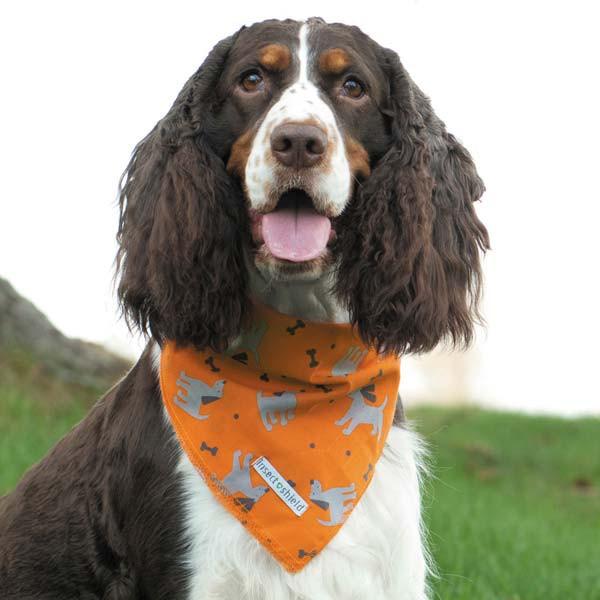
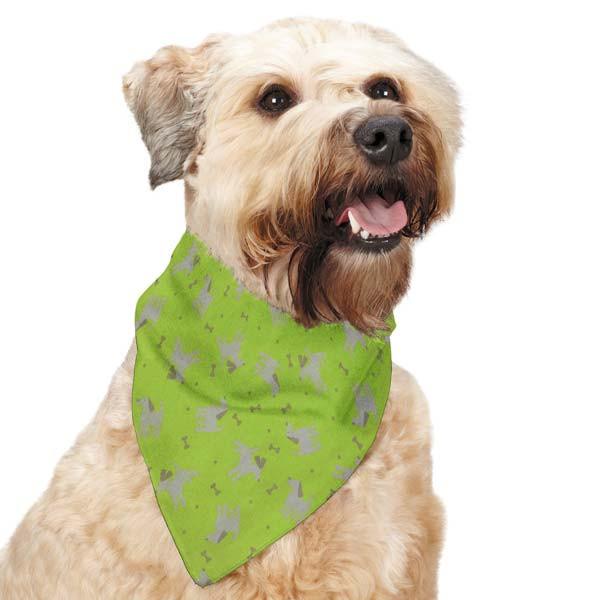
Protect Your Dog from Fleas and Ticks with the safe insect shield bandana. Customers have reported seeing fleas jump off their dog once they put the bandana on. The Insect Shield dog bandana repels mosquitoes, ticks, ants, flies, chiggers and no-see-ums. These insect repellent bandanas have no odor and are safe for both your pets and kids. Let your dog enjoy the outdoors bug free, purchase your insect repellent dog bandana today!
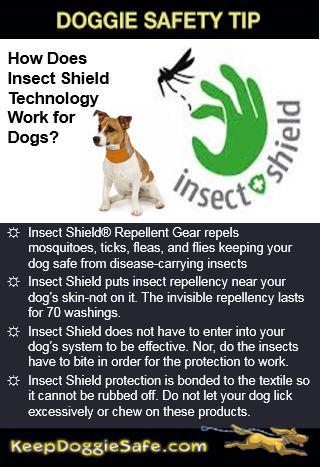
Insect Shield technology protects against a variety of insects that can carry dangerous diseases. Using technology registered with the EPA, this vest lasts a long time, is extremely effective and convenient. Insect Shield produces a man-made version of a natural repellent found in certain types of chrysanthemum flowers.
Here Are The Doggie Details:
- Repels mosquitoes, ticks, ants, flies, chiggers, and no-see-ums
- Long lasting: Repels insects through 70 launderings
- Less exposure to chemicals than sprays or topicals since none of the insecticide gets onto your dog's skin
- Bandana Dimensions: 19 by 19 inches.
- It fits most dogs but it can be attached to a collar if it's too small.
- You can also cut it to the right size for your dog, if it's too large Non-Toxic: Safe for Dogs and Kids! Man-made version of a natural repellent found in chrysanthemum flowers
- No odor! The repellent in the Insect Shield fabric is completely undetectable
Watch Our Demo Video
Customer Reviews
Shipping & Returns
Here are some quick points on our shipping practices and procedures.
- $5.99 First Class Shipping via USPS on Orders Less than $75
- FREE Shipping via USPS on Orders More than $75
- UPS shipping options are available. Rates will appear based on your shipping address during the checkout process.
- Most orders are picked, packed and shipped within 1 to 2 business days from when you place your order. Please be aware that our shipping department is very busy during sales events and the holidays, and we do our best to get orders shipped in a timely manner but sometimes take a little longer than normal. If you ever have a question about your order, reach out to our friendly customer service team and they help you find the information you need.
- A tracking number will be provided via email when your order has shipped.
- Sales tax only applies to North Carolina, California, and Kansas residents.
- Snoozer, Dogline, Sleepypod and iFetch products take an additional 1 to 2 business days to be picked, packed and shipped due to their location.
- Delivery typically takes an additional 2 to 7 business days after your order has left the warehouse.
- Expeditated shipping is not available.
Processing & Handling
We love getting orders out just as much as you enjoyed picking out the right products for your pet! The majority of our products are stocked at our North Carolina warehouse and are ready to be shipped to you. Most of our orders are shipped within 2 business days from when they are received.
You'll receive a tracking number via email once your order has been picked, packed and shipped. Please note that delivery typically takes an additional 2 to 7 business days after your order has left our warehouse.
Product Returns & Exchanges
KeepDoggieSafe.com does not refund shipping costs on returned orders. Please click here to learn how to return/exchange your order.
Undeliverable Packages
If your address cannot receive USPS deliveries, please choose a different shipping option at checkout.
If your order is returned to us as "Undeliverable", we will contact you for a different mailing address but you will be charged for the shipping charges to send the product again.
Packages Delayed Due To Circumstances out of our Control
We are committed to keeping your dog safe and ship it out as fast as possible. However, our shipping carriers have occasional service disruptions due to weather-related and other natural disasters or events. Unfortunately, these situations are out of our control and require follow up with the shipping provider for updates or escalation.
Lost or Stolen Packages
We are responsible for shipping products from our warehouses to your provided address. We are NOT RESPONSIBLE for lost or stolen items that are shown as "Delivered" by UPS, FedEx or USPS.
We will try to help locate your package, but your first call should be to the delivery service with the tracking number showing it was delivered. The shipping service including the post office finds the package more often than not.
Keep Doggie Safe does not claim any responsibility for lost or stolen packages. Once the carrier shows a package has been delivered, complaints should be directed to the carrier. Please reference the tracking number that was emailed to you in your shipment confirmation.
- USPS: 1.800.ASKUSPS
- UPS: 1.800.PICKUPS
Product Returns
The return policy at KeepDoggieSafe.com is very simple. You may return any product for up to 30 days after you receive the order. Purchases of Sale items are final.
Items must be clean and contain NO pet hair (None. Zip. Nada. No Pet Hair please!). Any returned item(s) must be in original, sellable condition and have all original tags and product packaging. If you are returning a Sleepypod Carrier or Snoozer Car Seat, DO NOT write on the cardboard box. This is part of the product packaging (shipping labels are acceptable)!
If we receive your item and it does not meet these requirements, we cannot offer you a refund or return the item back to you. The item will be donated to a local shelter.
Shipping costs on your original order are non-refundable unless we make a mistake in filling your order.
How To Return An Item
- You can start the return process by logging into your customer account here. Be sure to follow the instructions below to request your return:
- To access your customer account, enter your email address and then click Continue.
- Find and open the email sent from our store to your inbox and copy the six-digit verification code included in the email.
- Go back to the account sign-in page on KeepDoggieSafe.com and enter the six-digit verification code.
- Find and click the order with the item(s) that you would like to return.
- Select the item(s) that you would like to return.
- Select a return reason and add a note if needed.
- Click Request return.
- Please be sure to include your original invoice, all product packaging, and unworn, unwashed, and undamaged merchandise in your return package.
- Send any items back to us at the address below at your own expense:
KEEP DOGGIE SAFE RETURNS
1112 Tonsler Drive
Raleigh, NC 27604
- Once we receive your return, we will refund the purchase amount to the original form of payment.
- Please allow 2-3 weeks for your return to be processed.
Product Exchanges
We don't offer direct exchanges, because often, the prices of products vary by size. You can place a fresh order for the size you need and return the product that you already have back to us for a full refund.
Having Issues Choosing the Right Size?
All dogs are sized differently. We try very hard to update the sizing charts for all products. Please read them carefully and call us with questions.
Whoops! We Made a Mistake!
If there is an issue with your order, please contact us by email:
- Email: contact@keepdoggiesafe.com
Our customer service and fulfillment teams are made up of real people, and occasionally we do make mistakes. In the unlikely event that you have received the wrong item or something is missing from your order, please contact us and we will fix the issue as quickly as possible. We will send you a prepaid label to send the incorrect item back to us, and we will send out the correct item in exchange.
Defective Items
We test everything before we send it out, so it's unlikely you will receive a defective product. If your product proves to be defective within 30 days of receiving your order, contact us for a replacement.
If it's been longer than 30 day or the product is covered by a manufacturer's warranty, please contact the manufacturer directly for replacement or repair. Information should be located on the packaging and/or the product itself, but we're happy to help you find it.